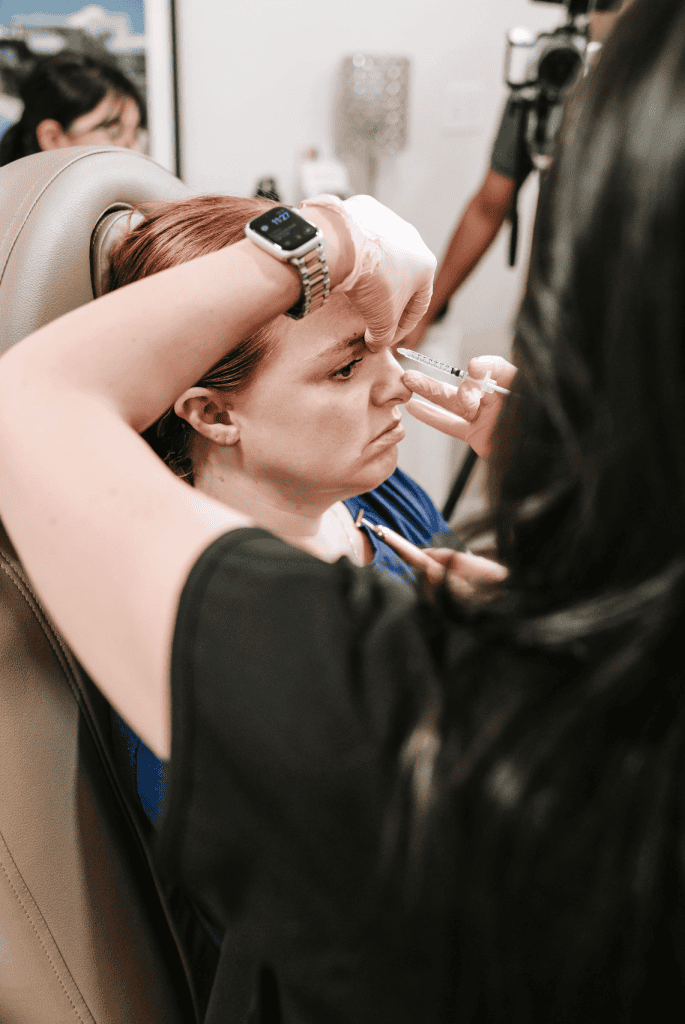
The Truth About Crow’s Feet and How the Right Nurse Injector Training Teaches You How to Advise Your Patients
As an aesthetic injector, patients often come to you asking, “Can you make my crow’s feet go away completely?” The honest answer? No—not entirely. While Botox and other treatments can significantly soften their appearance, crow’s feet form due to multiple factors, and completely erasing them just isn’t realistic. However, by educating your patients on the causes and best treatment options, you can help them achieve the most natural, long-lasting results. And, you know, keep them coming back to you for their treatments! It’s the ultimate win-win. If you’re looking to enhance your skills in addressing crow’s feet and other fine lines, the right nurse injector training can provide you with the techniques and expertise needed to deliver optimal results.
Let’s dive in, shall we?
What Causes Crow’s Feet?
Crow’s feet—those fine lines radiating from the outer corners of the eyes—are a common concern as patients age. These wrinkles develop due to a combination of factors, including:
- Cheek Volume Loss: As we age, we naturally lose volume in our mid-face, causing the skin to sag and fold more easily when we smile or squint. This structural shift contributes to the deepening of crow’s feet over time.
- Sun Damage: UV exposure accelerates collagen breakdown, leading to thinner, less elastic skin. Patients who have had significant sun exposure without proper protection often develop crow’s feet earlier and more prominently.
- Squinting: Whether from poor eyesight or frequent exposure to bright light, repeated squinting creates dynamic wrinkles around the eyes. Over time, these movements lead to permanent fine lines.
- Smiling: Now here is the tricky one. Smiling is great. We love to see it. But when you smile, the repeated contraction of the orbicularis oculi muscle contributes to crow’s feet over time. Is the answer to stop smiling? Absolutely not–what we teach in our nurse injector training is how to focus on strategic treatment options that soften their lines while preserving natural expression.
How to Treat Crow’s Feet Effectively
While we can’t make crow’s feet vanish entirely, we can dramatically reduce their appearance with a combination of treatments. The best approach often involves multiple modalities to address both the surface-level lines and the underlying structural concerns. Through comprehensive nurse injector training (like the one we offer right here at Injectables EDU), you can refine these techniques and expand your skill set to offer the best patient care.
1. Botox (Neurotoxin Injections)
Botox, Dysport, Xeomin, and Jeuveau are among the most effective treatments for dynamic crow’s feet. These neurotoxins work by temporarily relaxing the orbicularis oculi muscle, reducing the repetitive movements that cause wrinkles.
Best candidates: Patients with mild to moderate crow’s feet due to muscle movement.
Treatment frequency: Every 3-4 months for optimal results.
Limitations: Botox won’t address wrinkles caused by volume loss or sun damage, so combination treatments may be necessary.
2. Dermal Fillers
Since volume loss in the cheeks contributes to crow’s feet, restoring mid-face volume with dermal fillers like Juvederm, Restylane, or Sculptra can help lift and support the skin, indirectly reducing fine lines around the eyes.
Best candidates: Patients with deeper-set crow’s feet due to facial volume loss.
Treatment frequency: Every 12-24 months, depending on the filler type.
Limitations: Direct filler placement near the crow’s feet is generally avoided due to the delicate skin in this area. Instead, cheek augmentation is used to support the surrounding skin.
3. Skin Resurfacing Treatments
Laser resurfacing, microneedling, and chemical peels help improve skin texture and stimulate collagen production, making crow’s feet less noticeable over time.
Best candidates: Patients with sun damage, fine lines, and overall skin laxity.
Treatment frequency: Varies based on modality; laser treatments may be done annually, while microneedling can be performed every few months.
Limitations: Some downtime may be required, and sun protection is crucial post-treatment.
4. Medical-Grade Skincare
Incorporating high-quality skincare products into a patient’s routine can help slow the progression of crow’s feet. Encourage patients to use:
- Retinoids to increase cell turnover and collagen production.
- Vitamin C for antioxidant protection against UV damage.
- Peptides to strengthen skin and boost elasticity.
- Broad-spectrum sunscreen to prevent further sun damage.
Setting Realistic Expectations with Patients
One of the most important roles you play as an injector is setting clear, honest expectations for your patients. This helps you build a meaningful relationship with them–where they trust you–which in turn keeps them coming back.
Since crow’s feet are caused by multiple factors, a single treatment won’t completely erase them. Instead, explain how a tailored combination approach will yield the best, most natural-looking results.
If you’re seeking to refine your ability to manage patient expectations and master advanced techniques, nurse injector training can help you develop these critical skills. Need help picking one? Take a look at our Course Comparison Guide here.
Key talking points for patient consultations:
- Botox is excellent for softening crow’s feet but won’t fix everything. Combining treatments may be necessary for optimal outcomes.
- Treating volume loss in the cheeks can make a significant difference. If a patient’s lines are due to sagging skin, fillers may be a more appropriate starting point.
- Consistency is key. Patients who commit to regular treatments and good skincare see the best long-term results.
- Crow’s feet don’t mean aging poorly. Smiling is a natural, beautiful part of life, and soft lines around the eyes aren’t necessarily a bad thing. The goal is enhancement, not complete erasure.
So, What’s Next?
Helping your patients achieve the best results with crow’s feet treatment starts with education and technique. If you’re looking to refine your injection skills and learn advanced strategies for treating fine lines, we can help.
Schedule a mentoring call with Suzanne to get expert guidance on injection techniques and patient communication.
Sign up for nurse injector training with Injectables EDU to deepen your expertise and become a go-to aesthetic injector for natural, lasting results.
By mastering the art of treating crow’s feet, you’ll ensure your patients feel confident in their results—and keep coming back to you for their aesthetic needs. We told you–this one is a win-win.